Sign up to our Newsletter


Make it happen


Tips & Articles

Malaga, Costa del Sol, Spain » Entertainment » Attractions

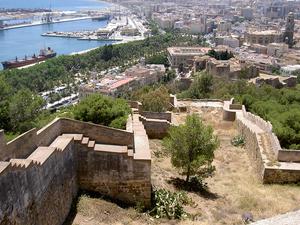
The big attractions of Malaga include the Alcazaba (fortress) and the Castillo de Gibralfaro, featuring a fantastic view of the town and bay. The city presents a handful of excellent museums ranging from historical to modern artefacts that continue to prove to be very popular with locals and tourists alike. The cathedral and the churches, located in the centre of the city also attract many visitors to the city.


Alcazaba (Fortress) ( Wikipedia )

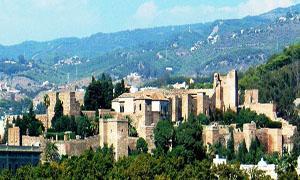
King Badis of the Zirid Dynasty built the Alcazaba Fortress in 1040 to protect the royal family from outside invaders. Situated on the highest point of the hill, it's one of the best-preserved Alcazaba (from the Arabic word al-qasbah which literally translates to the English word citadel ), in Spain. The Moorish Muslim rulers that erected the fortress used the remains (visible in its columns and pillars) of a Roman theatre lying adjacent to the Moorish construction.


Sea Life Centre & Aquarium ( Visit Site )

The Sea Life Centre of Benalmádena (suburb of Malaga) consists of many types of maritime recreations including a variety of exotic fish displays, shark feedings, incredible underwater tunnel and rockpool experience. Additionally, it has a section dedicated to the life at sea, where you can find ships, models, and other fishermen tools.


Museo Taurino Antonio Ordóñez (Bullfighting Museum) ( Visit Site )

The Antonio Ordoñez Bullfighting Museum inside the La Malagueta Bullring displays different examples of bullfightingarticles as well as an in-depth guide about the history of bullfighting in Malaga and the rest of Spain.


Castillo de Gibralfaro ( Wikipedia )

The ruins of the Gibralfaro castle lie on the slopes of the Malaga hill overlooking the city and the Mediterranean Sea. A Moorish castle of an unknown origin, Yusuf I of the Kingdom of Granada built it during the Phoenician-Punic period. The name of castle is derived from the Arab word Yabal (Hill) and another Greek word Faruh (Lighthouse). The name Gibralfaro means lighthouse hill.


Malaga Cathedral ( Visit Site )

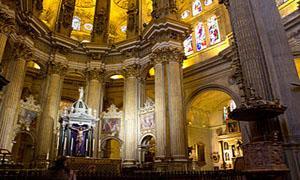
Between the 16th - 18th centuries, Diego Siloe planned the Malaga Cathedral also known as Catedral de la Encarnación on the site of a mosque, which represented eight centuries of Muslim power. Though the construction of the cathedral continued until the 18th century, it is still unfinished as the main façade and south tower is incomplete. Along with the splendid sculptures and rare antique architecture, the cathedral also houses its own museum.


The Picasso Home Museum ( Visit Site )

The Picasso Home Museum is a public foundation established on the 26th of February 1988 under the decision of the City Council. The building was built in 1861 and in 1997 it went through a series of renovations. Classic pieces of Picasso are on display, as well as ceramics and sketches.

Located in the centre of the city and near the historic monuments, the museum is just a few minutes away from the Cervantes Theatre and is a part of an urban structure, the Casas de Campos. During the restoration of the building, Roman and Phoenician ruins were found and these are displayed in the basement.


Plaza de la Merced (Casa Natal de Picasso)
( Wikipedia )

Plaza de la Merced is a large walking plaza home to the birthplace of famous painter Pablo Picasso. The cosmopolitan square is full of cafes and temporary exhibitions, but the main attraction is Picasso's birthplace that includes a facility to incorporate the painter's works and art collections as well organises exhibitions and collections of other painters like Frank Rebaxes and Luis Molledo.


El Parque ( Visit Site )

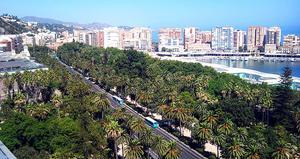
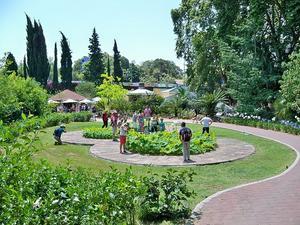
Constructed at the end of the 19th century, El Parque makes its way along the "Passeo del Parque". Filled with beautiful tropical flowering trees and shrubs, the park contains some exotic species brought when Malaga was an important trading centre.

Torremolinos Beach ( Wikipedia )

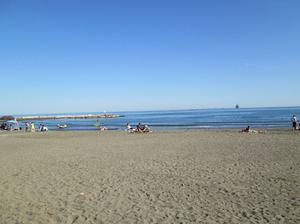
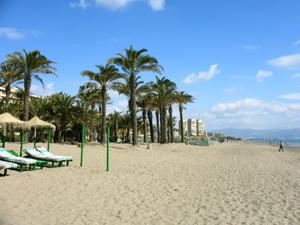
Located in the centre of Torremolinos, next to Playamar, Torremolinos beach is a popular destination for both tourists and locals visiting Malaga. The beach is well equipped with facilities and is ideal for family holidays.

Churches


Iglesia De Los Santos Martires ( Visit Site )

This church was erected by the Catholic Kings after conquering Spain in 1487. It is devoted to local saints and martyrs, Ciriaco and Paula killed in Malaga while defending their faith. The church, built originally in Gothic-Mudejar style features an aesthetically pleasing Baroque style interior, although the Mudejar tower is still present outside.


Iglesia de Santiago ( Visit Site )

Founded in 1490, Malaga's oldest church is built on the site of a former mosque. The church predominantly comprises of baroque style stunning interior with only the Mudejar style entrance of the original facade remaining. Most importantly it contains Pablo Picasso's baptismal certificate when he was christened in 1881.


Iglesia San Juan Bautista ( Visit Site )

This church was one of the four churches founded by the Catholic Kings after their conquest of the city in 1587. It features Gothic-Mudejar style architecture with influences of Baroque and Neo-Gothic of the 19th century. Inside you can see the figure of the famous San Juan, the work of Francisco Ortiz.


Santa María de la Victoria ( Visit Site )

Built in 1487, this church features the outstanding retable which lies on top of the main altar. It was originally a hermitage, which was later replaced by a Baroque church, paid for by the Count of Beunavista. The insides feature a noteworthy "camarín" of the Virgin, gesso artwork and crypt of the Buenavista family.